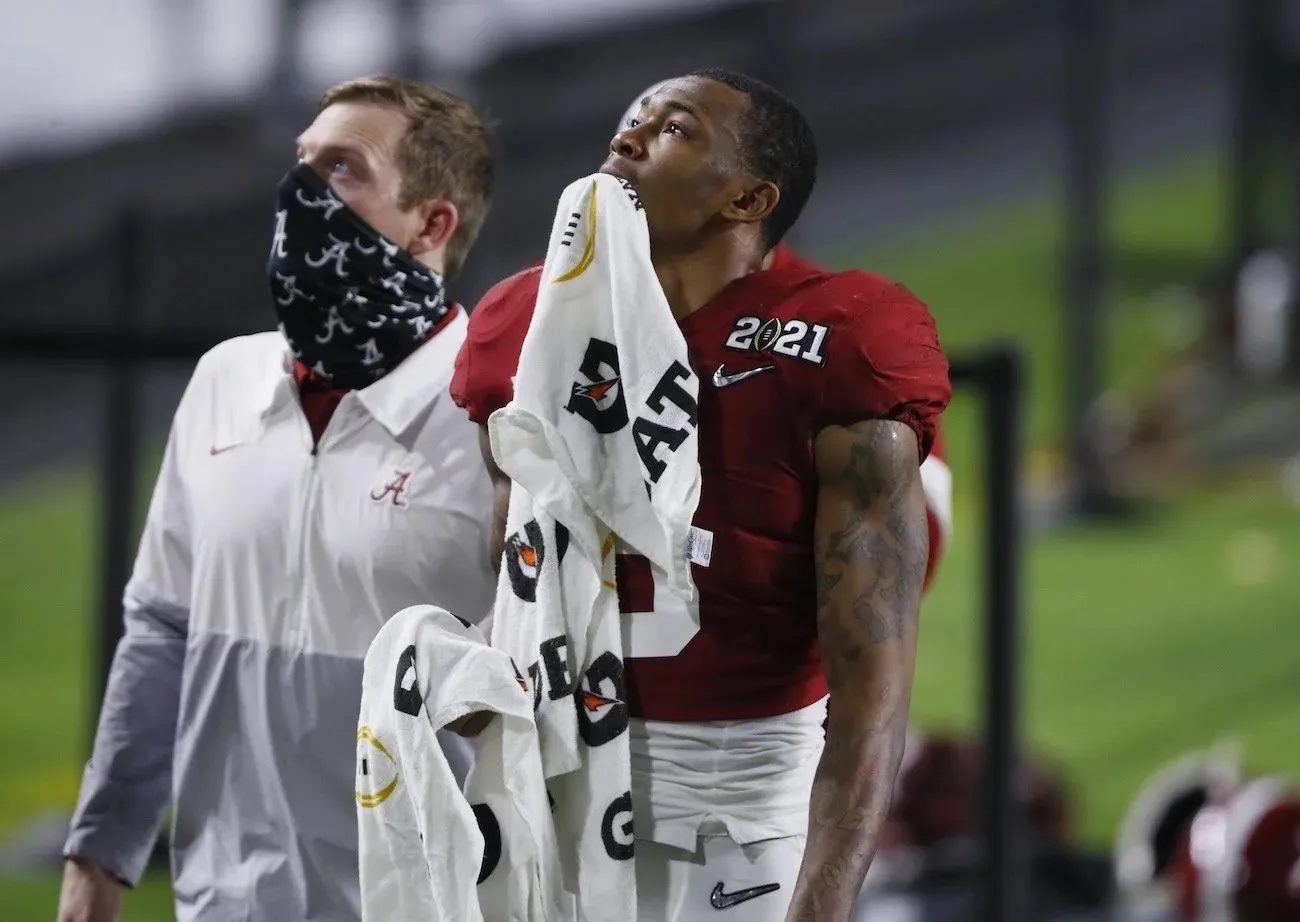
Dr. Pharr on the Alabama sideline at the 2021 national championship game, during his fellowship year.
Fall: football and soccer
Football season brings more knee injuries and more shoulder dislocations. Soccer brings its share of knee injuries too, including ACL tears. If you felt a pop in your knee on a cut, the knee injury page explains what it can mean.
Winter: basketball
Basketball brings overuse injuries, especially patellar tendonitis: pain at the front of the knee that builds from jumping and landing again and again.
Spring: baseball and softball
Spring is throwing season, for baseball and softball alike. Shoulder and elbow injuries show up in pitchers and other throwers, including injuries to the UCL on the inside of the elbow. Pain on the inside of the elbow or a drop in velocity is worth getting checked, and the throwing elbow page explains why.
Summer: travel ball and camps
Summer is travel ball and camps, and for a lot of young athletes it’s when one sport starts to run all year. Dr. Pharr asks about exactly that: whether you play travel and rec leagues, whether you play year round, and whether another sport gives your throwing arm a rest. Throwing year round without a break is one of the reasons he sees UCL injuries in young players.
Why the timing matters
Take a high school junior who gets hurt playing football in the fall, when junior-year baseball in the spring is the real priority. Surgery now might be the right course, so there’s time to recover before baseball. Another athlete might rather get through football season with bracing and rehab, maybe with a PRP injection, and see whether the injury heals, knowing surgery afterward could cost the next season.